Flag Counter

Sunday, October 7, 2012

Boeing Delivers United Airlines' First 787 Dreamliner


- United is the first North American carrier to fly the 787
- Dreamliner opens new routes for United
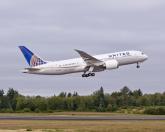
 
Boeing Delivers United Airlines’ First 787 Dreamliner
These images are available for editorial use by news media.

EVERETT, Wash., Sept. 24, 2012 /PRNewswire/ -- Boeing (NYSE: BA) and United Airlines announced today the delivery of the airline's first 787 Dreamliner.  United is the first airline in North America to take delivery of the 787.

Jeff Smisek, president and CEO of United, said, "As the North American launch customer, we are delighted to be getting our first 787 Dreamliner. As we continue to build the world's leading airline, we are excited for our customers and co-workers to experience this game-changing aircraft."

United has announced it will initially use the 787 on international routes to Africa, Asia and Europe. The airline will conduct temporary domestic flights before transitioning its 787 fleet to international service in late 2012.

"This 787 delivery represents the continuation in the more than 80-year partnership between our two companies," said Ray Conner, president and CEO of Boeing Commercial Airplanes.

"United now begins a new chapter with the 787 Dreamliner, the most technologically advanced commercial jetliner ever built. It reinforces United's commitment to be the world's leading airline by providing unmatched fuel efficiency and passenger comfort."

Made from composite materials, the Boeing 787 Dreamliner is the first mid-size airplane capable of flying long-range routes and will allow airlines to open new, non-stop routes preferred by the traveling public. In addition to providing airlines with unprecedented fuel economy and low operating costs, the 787 features a host of new technologies that greatly enhance the passenger experience.

This delivery marks the first of 50 Dreamliners that United has on order. The airline's 787 cabin is configured with 36 seats in United BusinessFirst, 72 seats in United Economy Plus and 111 seats in United Economy. Customers will be more comfortable with improved lighting, bigger windows, larger overhead bins, lower cabin altitude and enhanced ventilation systems, among other features.
United's first Dreamliner is expected to arrive in Houston later this week to begin a month-long training and certification program including non-commercial flights to each of United's domestic hubs.

Contact:
Tim Bader
North America and Leasing Communications
+1 425-717-0672
tim.s.bader@boeing.com
More information: www.newairplane.com/787/delivery-airline/en/ual/

SOURCE Boeing

Boeing, ANA Announce Orders for 11 787-9 Dreamliners


SEATTLE, Sept. 24, 2012 /PRNewswire/ -- Boeing [NYSE: BA] and All Nippon Airlines (ANA) announced that the ANA Group has ordered an additional 11 787-9 Dreamliners. The order, valued at $2.7 billion at current list prices, bring the total number of 787s ANA has ordered to 66 airplanes consisting of 36 787-8s and 30 787-9s.

"The improved fuel efficiency and greater seating capacity of the 787-9 will provide ANA with added flexibility," said Hideki Kunugi, Head of Aircraft Purchasing & Sales at ANA. "The new Dreamliners will also help support the profitable expansion of ANA's international and domestic routes in the future."

ANA, the launch customer for the 787 Dreamliner, is Boeing's largest commercial airline customer for the 787 Dreamliner.

"As a repeat 787 customer we are honored to have ANA validate the 787 as a truly game-changing airplane in commercial aviation," said Ihssane Mounir, vice president of Sales and Marketing for Japan, Greater China and Korea, Commercial Airplanes. "We look forward to celebrating many more milestones with ANA and are committed to supporting ANA as we continue to make history together."

The airline has announced plans to launch a new route from Narita to San Jose starting January 2013 using the 787, while current services between Narita and Seattle service will switch to 787 operations on Oct. 1, 2012 and Haneda to Beijing to the 787 on October 28, 2012.

The Boeing 787-9 Dreamliner is a slightly longer version of the 787-8 and will carry 250-290 passengers on routes of 8,000 to 8,500 nautical miles (14,800 to 15,750 kilometers).

The 787 provides airlines with incredible fuel efficiency, resulting in exceptional environmental performance. The airplane uses 20 percent less fuel than today's similarly sized airplanes. It travels at a speed of Mach 0.85, which is similar to the speed of other Boeing twin-aisle airplanes.

Contact:
Kevin Yoo
BCA International Communications
+1 206-249-6372
kevin.k.yoo@boeing.com

SOURCE Boeing

Boeing Celebrates First Anniversary of First 787 Delivery


EVERETT, Wash., Sept. 25, 2012 /PRNewswire/ -- Today marks the one year anniversary of the first delivery of the first Boeing (NYSE: BA) 787 Dreamliner to Japan's ANA (All Nippon Airways). Since then, Boeing has delivered 25 Dreamliners to six different customers.

"One year ago today we reached a significant milestone in Boeing and ANA's partnership," said Ray Conner, president and CEO of Boeing Commercial Airplanes. "We are grateful for the support and confidence that ANA has placed in Boeing as the launch customer of the 787 Dreamliner."

"ANA has helped validate the airplane as truly game-changing," said Conner.  "All of our 787 customers have been an integral part of making the 787 a success. We are committed to each of them as they put the Dreamliner into service."

Thousands of Boeing employees and dignitaries celebrated the historic delivery in a ceremony on Sept. 26 that highlighted the pride and dedication of the team that created the airplane and the cooperation and support of the airline.

The Boeing 787 Dreamliner is the first commercial jetliner made primarily of advanced composite materials. It offers exceptional passenger comfort features including cleaner air, a lower cabin altitude, higher humidity, bigger windows that dim electronically and more overhead storage space.

Airlines appreciate its fuel efficiency, which is 20 percent better than other airplanes in its class. This fuel efficiency also results in 20 percent lower carbon emissions, helping Boeing to achieve its environmental objectives.

Contact:
Lori Gunter
787 Communications
+1 206 931 5919

SOURCE Boeing

Boeing to Release Third-Quarter Results on October 24


CHICAGO, Sept. 26, 2012 /PRNewswire/ -- The Boeing Company (NYSE: BA) will release its financial results for the third quarter of 2012 at 7:30 a.m. Eastern Time on Wednesday, October 24. Boeing Capital Corp. results will also be released at that time.

Chairman, President and Chief Executive Officer Jim McNerney and Executive Vice President and Chief Financial Officer Greg Smith will discuss the results and company outlook during a conference that day at 10:30 a.m. Eastern Time.

Visit http://www.boeing.com/companyoffices/financial/  to access a link to the live broadcast of the conference. A Boeing news release will also be available on that site.

Individuals should check the website prior to the session to ensure their computers can access the audio stream and slide presentation.  Instructions for obtaining the required free downloadable software will be posted on the site.

Contact: Communications, (312) 544-2002

SOURCE Boeing

Boeing, GOL Announce order for 60 737 MAX Airplanes


- Brazil's largest low-cost airline to use 737 MAX to replace airplanes with more efficient fleet
 
Boeing, GOL Announce order for 60 737 MAX Airplanes
These images are available for editorial use by news media.

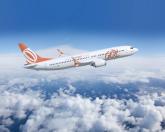
SAO PAULO, Oct. 1, 2012 /PRNewswire/ -- Boeing (NYSE: BA) and GOL Linhas Aereas Inteligentes announced today GOL's purchase of 60 737 MAX airplanes. GOL plans to use the new super-efficient 737 MAX to increase operational efficiency and reduce costs.

The order is valued at approximately $6 billion at published list prices, making it the largest order in GOL's 12-year history and the largest airplane order from a single airline in South America's aviation history.

"The decision to order Boeing 737 MAX is in line with our commitment to maintain a modern and safe fleet that will allow us to sustain our competitive advantage in the long term," said Paulo Kakinoff, CEO of GOL. "The new airplanes will have one of the best cost-benefit ratios in the market due to its unique operational economy, so it is fully compatible with our low-cost model."

The 737 MAX builds on the strengths of Boeing's best-selling Next-Generation 737 with big advances in fuel-efficiency and environmental performance. Equipped with new LEAP-1B engines from CFM International and improvements such as the Advanced Technology winglet, the 737 MAX reduces fuel burn and CO2 emissions by 13 percent and maintains the 8 percent operating cost advantage over future competition. This order puts the 737 MAX at 724 firm orders to date.

"Boeing has partnered with GOL since their inception just over 12 years ago. We've watched them grow from a small start-up airline to a driving force in global aviation and we are proud to partner with them as the South American launch customer for the 737 MAX," said Ray Conner, president and CEO of Boeing Commercial Airplanes.

"The unmatched operating economics of the 737 MAX make it the absolute best airplane for the world's low-cost carriers and legacy carriers alike. GOL's commitment to the MAX proves this once again."

In just more than 11 years, GOL has established itself as one of the fastest growing low-cost, low-fare airlines in the world. GOL currently offers the most extensive and convenient routes in South America with approximately 810 daily flights to 63 destinations in Brazil and 12 in South America and the Caribbean. Combined with six code-share partnerships and more than 60 interline agreements with foreign companies, GOL's route network is among the best serving customers traveling to, from and within Brazil.

Contact:
Adam Morgan
Boeing Commercial Airplanes
+1 281-386-4396
adam.k.morgan@boeing.com
Marcus De Barros Pinto
GOL Linhas Aereas Inteligentes
+ 55 11 8160 8019
mbpinto@golnaweb.com.br
Photos and captions are available here: http://boeing.mediaroom.com

SOURCE Boeing

Boeing Forecasts Air Cargo Growth Driven by Globalization and Trade


Long-term forecast projects 5.2 percent annual growth over next 20 years; world freighter fleet to expand to nearly 3,200 airplanes by 2031
 
ATLANTA, Oct. 2, 2012 /PRNewswire/ -- Boeing (NYSE: BA) said today that the global air cargo market will expand at a 5.2 percent annual rate over the next 20 years. According to the Boeing World Air Cargo Forecast 2012/2013, growth will be driven by world gross domestic product (GDP) that will nearly double over the forecast period.

Trade is expected to increase through liberalization of markets and more efficient aircraft and infrastructure improvements will reduce the cost of air cargo.

Boeing released the biennial forecast, which is widely cited by airlines and industry groups, at the International Air Cargo Forum and Exhibition 2012 in Atlanta.

Air cargo traffic will grow over the long term despite current near-term market weakness and worldwide economic uncertainty. The industry languished following the 2010 recovery posting slight declines in traffic in 2011 and thus far in 2012.

"Current industry uncertainty has brought a disparity of viewpoint concerning the future of the air cargo business, but economic activity – particularly world gross domestic product and industrial production – remains the key driver of the air cargo market," said Tom Crabtree, regional director, Business Development & Strategic Integration, Boeing Commercial Airplanes. "Over the long term, indicators such as GDP growth at 3.2 percent and the need for greater operational efficiency will prevail in the marketplace."

Boeing forecasts the world freighter fleet will increase to 3,198 airplanes from 1,738 by 2031. Large freighters – such as the Boeing 747 and 777 – will represent 36 percent of the fleet, compared to 31 percent today.

 The significant efficiency and capability advantages of large freighters will enable carriers to manage projected traffic growth without increasing the number of airplanes proportionately. Freighter demand will be met by 935 new factory-built airplanes, valued at $250 billion, with 1,820 freighters coming from passenger-to-freighter conversions. Conversions will account for about 66 percent of total demand.

"Air cargo is and will continue to be a vital tool for global businesses and commerce in the management of supply chains and bringing critical goods to market," said Crabtree.

Markets connecting Asia-Pacific will lead the industry in growth, with domestic China and intra-Asia traffic experiencing the highest percentage traffic growth, at 8 percent and 6.9 percent, respectively, over the 20-year forecast period. North America-Asia, Europe-South Asia, Europe-Asia, and Europe-Middle East also will be above the world average.

Fuel costs are expected to be volatile, but are not anticipated to move significantly higher than current levels. Additionally, shippers of such cargo as perishables and very high value commodities will continue to find value in the speed of air cargo.

Boeing provides the most complete and efficient freighter product line, including new production freighters and passenger-to-freighter conversions, teaming with industry leaders to provide innovative conversion solutions to match virtually any air cargo requirement.

The World Air Cargo Forecast 2012/2013 is available at http://www.boeing.com/commercial/cargo. Boeing has published the biennial World Air Cargo Forecast as an individual report since 1986.

Contact:
Bob Saling
Cargo Communications
+1 206 852-3327
bob.saling@boeing.com
More information: http://www.boeing.com/commercial/cargo

SOURCE Boeing

Boeing, GECAS Finalize Order for up to 100 737 MAXs and Next-Generation 737s


- Firm order for 75 737 MAX 8s and 10 Next-Generation 737-800s
- Another 15 737-800s could be added
- 737 MAX momentum continues in the leasing industry
 
Boeing, GECAS Finalize Order for up to 100 737 MAXs and Next-Generation 737s
These images are available for editorial use by news media.

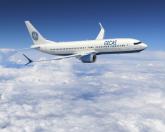
SEATTLE, Oct. 3, 2012 /PRNewswire/ -- Boeing (NYSE: BA) and GE Capital Aviation Services (GECAS), the commercial aircraft leasing and financing arm of General Electric (NYSE: GE), finalized a firm order for 85 737s, which includes 75 737 MAX 8s and 10 Next-Generation 737-800s. The order, first announced as a commitment at the Farnborough Airshow in July, allows for up to 15 additional 737-800s.

The order, worth $8.4 billion at list prices, further illustrates both the strength of the 737 MAX and the continuing strong demand for the Next-Generation 737 in the airplane-leasing industry. To date, 821 737 MAX airplanes have been ordered.

"The 737 MAX will be a perfect complement to our broad portfolio of modern, fuel efficient aircraft that offer our airline customers the lowest operating costs," said GECAS President and CEO Norman C.T. Liu.

"GECAS is a leader in the commercial airplane leasing industry with a successful track record of placing 737s with airlines worldwide," said President and CEO Ray Conner, Boeing Commercial Airplanes. "The GECAS leadership team will have the same success with the 737 MAX. The airplane will provide passengers with the exceptional flying experience that they have come to expect from the 737 family, but with increased fuel efficiency and technological advancements."

The 737 MAX is a new-engine variant of the world's best-selling airplane and builds on the strengths of today's Next-Generation 737. The 737 MAX incorporates the latest-technology CFM International LEAP-1B engines to deliver the highest efficiency, reliability and passenger comfort in the single-aisle market. Airlines operating the 737 MAX will see an 8 percent operating cost per seat advantage over tomorrow's competition.

With this order, GECAS has ordered 580 airplanes directly from Boeing since 1995, which includes 737s, 747s, 757s, 767s and 777s. To date, GECAS has taken delivery of 433 of the airplanes.   

About GE Capital Aviation Services (GECAS)

GECAS, the U.S. and Irish commercial aircraft financing and leasing business of GE, has a fleet of over 1,710 owned and serviced aircraft with approximately 235 airlines in over 75 countries. GECAS offers a wide range of aircraft types and financing options, including operating leases and secured debt financing, and also provides productivity solutions including spare engine leasing, spare parts financing and management. GECAS, a unit of GE Capital, has offices in 24 cities around the world.

GE works on things that matter. The best people and the best technologies taking on the toughest challenges. Finding solutions in energy, health and home, transportation and finance. Building, powering, moving and curing the world. Not just imagining. Doing. GE works.

For more information, visit the company's website at www.ge.com

Contact:
Tim Bader
North America and Leasing Communications
+1 425-717-0672
Tim.s.bader@boeing.com
More information: www.newairplane.com/737max/gecas

SOURCE Boeing

Boeing Reports Third-Quarter Deliveries

CHICAGO, Oct. 4, 2012 /PRNewswire/ -- The Boeing Company (NYSE: BA) announced today deliveries across its commercial and defense operations for the third quarter of 2012.
Major program deliveries during the third quarter were as follows:


Major Programs
3rd Quarter
2012
Year-to-Date
2012


Commercial Airplanes Programs


  737 Next Generation

102


310

747

8


21

767

7


20

777

20


62

787

12


23

Total

149


436


Defense, Space & Security Programs


  AEW&C

-


2

  Apache (New Builds)

10


13

  Chinook (New Builds)

18


40

  C-17

3


8

  F-15

-


8

  F/A-18E/F and EA-18G

12


36

  P-8

2


3

  Satellites (Government & Commercial)

5


9

 
Contact:
Stephanie Pope (312) 544-2140 (Investor Relations)

Matt Welch (312) 544-2140 (Investor Relations)

Chaz Bickers (312) 544-2002 (Communications)

SOURCE Boeing

Boeing Delivers First South Carolina-built 787 Dreamliner

 
Historic delivery to Air India begins a new chapter of Boeing airplane production in region

NORTH CHARLESTON, S.C., Oct. 5, 2012 /PRNewswire/ -- Boeing (NYSE: BA) today marked a historic milestone with delivery of the first 787 Dreamliner built at its North Charleston, S.C., facility to Air India.

The delivery continues the momentum of the 787 Dreamliner's entry into revenue service by customers globally and marks the beginning of a new era of commercial airplane production in South Carolina.

"Within just three years of breaking ground, we have flown and delivered our first airplane built at Boeing South Carolina," said Jack Jones, vice president and general manager, Boeing South Carolina. "This is a tribute to the remarkable Boeing South Carolina team and the support we have received from our airline customers, our supplier partners and the Boeing enterprise, as well as the relationship we have with the State of South Carolina."

Work on the Boeing South Carolina Final Assembly and Delivery Center began in November 2009. Production of the first South Carolina-built 787 began in mid-2011 and the completed airplane rolled out of the factory in April.

Boeing South Carolina fabricates, integrates and assembles the midbody and aftbody fuselage sections for all 787 Dreamliners. Completed sections are joined in South Carolina Final Assembly, or transported via the Dreamlifter to 787 Final Assembly in Everett, Wash.

"We're delighted to be the first airline in the world to take delivery of a Dreamliner from this beautiful factory and look forward to taking many more," said Air India Board Member K.M. Unni. "The 787 is an airplane with unmatched efficiency and technology, which will help in our airline's turnaround plan."

Dinesh Keskar, senior vice president of Asia Pacific and India Sales, Boeing Commercial Airplanes, praised Boeing's long, successful partnership with Air India, including delivery in September of its first two of 27 Dreamliners. "With two 787s successfully introduced to Air India's fleet, passengers are enjoying breakthrough features such as larger windows, lower cabin altitude and unprecedented flying experience," said Keskar.

Today's delivery marks the 28th 787 Dreamliner delivered to date. Boeing South Carolina will increase final assembly production to three 787s per month by the end of 2013.

The Boeing 787 Dreamliner is the first commercial jetliner made primarily of advanced composite materials. It offers exceptional passenger comfort features, including cleaner air, a lower cabin altitude, higher humidity, bigger windows that dim electronically and more overhead storage space.

Airlines appreciate its fuel efficiency, which is 20 percent better than other airplanes in its class and results in 20 percent lower carbon emissions.

Contact:
Tim Deaton
Boeing South Carolina
+1 843-789-810
timothy.r.deaton@boeing.com

SOURCE Boeing

Saturday, September 22, 2012

Boeing trims vacated 787 delivery slots to reduce risk

Boeing has trimmed the pace of future 787 deliveries to reduce the risk of over-burdening the production system as it executes a swift and critical ramp-up.
Ray Conner, president of Boeing Commercial Aircraft, also is reviewing plans to ramp up to two 747-8 deliveries per month, and taking a less strident approach than his predecessor on speeding up delivery rates.
But Conner remains "cautiously optimistic" that the company's across-the-board production increases can still be executed. The ramp-up is the basis for the company's guidance for revenue and profitability.
"If we hit these ramp rates we're going to do very well, and we're going to hit them," Conner said at a Morgan Stanley conference on 14 September.
Qantas Airways' decision on 23 August to cancel delivery slots for 35 787-9s created rare vacancies on Boeing's production skyline, but the airframer has chosen not to accept requests for those slots from other customers.
"I've been getting calls all the time to get those positions," Conner says. But "we're using that as an opportunity to de-risk our rate ramp," he added.
Making Boeing's task more of a challenge is the company's schedule to introduce the 787-9 variant in 2014, he said.
By the end of 2013, Boeing plans to deliver 10 787s per month from three assembly lines and the engineering modification centre, or twice the output today. Only 3.5 787s were delivered per month less than a year ago.
Over the same period, Boeing also is increasing monthly output on the 777 from seven to 8.3, and the 737 from 35 to 42. Jim Albaugh, Conner's predecessor, indicated in May that he wanted to push output even faster, complaining that a seven-year order backlog is "too much".
Conner, however, declined an invitation by a Morgan Stanley aerospace analyst to echo Albaugh's philosophy. Instead, Conner spoke of maintaining rates for the 737 at 42 per month and for the 777 at 8.3 per month at least for a certain period.
But Conner seemed less optimistic about prospects for maintaining plans to grow the 747-8 output to two per month.
"The cargo market has flattened," he said.
But he added that high fuel costs are driving cargo carriers to park less-efficient freighters, and continue taking delivery of 777Fs and 747-8Fs.

Lion Air, Malaysian partner launch Malindo Airways

Indonesian low-cost carrier Lion Air will start a hybrid airline in Malaysia in a joint venture with the country's National Aerospace and Defence Industries (NADI).
The new carrier, named Malindo Airways, will start operations in May 2013 with a fleet of 12 Boeing 737-900ER aircraft.
The airline will offer a "hybrid product" using aircraft with a two-class configuration – 12 in business and 168 in economy. The aircraft will also be equipped with in-flight entertainment systems and in-flight connectivity, Lion Air president director Rusdi Kirana said at a press event in Kuala Lumpur, ahead of the signing ceremony.
Under the agreement, NADI will hold a 51% stake in the new carrier and Lion Air 49%. The airline has named Kirana's personal assistant, Chandran Ramamuthy, as its chief executive.
Malindo will be based at Kuala Lumpur International airport's terminal two and focus on routes between Malaysia and Lion Air's hub in Indonesia before operating to other cities such as Bangkok, Manila, Hanoi and Guangzhou. It will also operate on domestic routes.
The carrier intends to add 12 aircraft to its fleet each year, including the Boeing 737 Max and 787. These aircraft will come from Lion Air's current order book, says Kirana.
The five 787s Lion Air has on order – originally set for its premium carrier Batik Air – will instead go to Malindo in 2015. Lion Air is now in talks with Boeing to order an additional 10 787s, said Kirana.
To compete as a newcomer, the new airline will offer ticket prices lower or at least on par with that of Malaysian low-cost carrier AirAsia, said Kirana, adding that Malindo will have a low cost base owing to the involvement of NADI.

Air India takes delivery of 2nd 787 from Boeing SC

Air India has taken delivery of its second 787 Dreamliner and is scheduled to fly it away from Charleston International Airport this afternoon, a Boeing spokesman has confirmed.
The plane, one of two assembled in Everett, Wash. and flown to North Charleston in early July, was officially delivered to the Indian national carrier Tuesday, Wilson Chow, the spokesman, wrote in an email.

According to the flight-tracking website FlightAware, the jet is scheduled to leave for Frankfurt, Germany at around 3 p.m.
The second 787 delivery and flyaway from Boeing South Carolina comes a week and a half after the first. The first jet, which also was made in Washington and then sat parked on the North Charleston flight line for more than two months, was paid for and signed over on Sept. 6 and flew to Frankfurt on Sept. 7. It continued on from there to New Delhi, India, where it was welcomed with a water cannon ceremony.
Tuesday’s delivery comes amid a continuing investigation into the General Electric engines that power Air India’s Dreamliners.
Two GEnx engines have failed this summer, including one in North Charleston, and cracks were found in the drive shaft of a third engine. That series of events led the National Transportation Safety Board on Friday to urgently recommend regular inspections of all in-service GEnx engines. Also on Friday, the Federal Aviation Administration said it “will soon issue an emergency airworthiness directive,” but the FAA has not yet taken any such action.
Follow the Air India 787’s flight from Charleston to Germany on FlightAware here: http://flightaware.com/live/flight/AIC170

Boeing 787 Dreamliner to join Etihad in 2014

The first Boeing 787 Dreamliner will join Etihad in the last quarter of 2014. Etihad Airways, the national airline of the United Arab Emirates, recently announced its plans to take delivery of more 777s and awaits the arrival of the 787 Dreamliner. Last December, Etihad Airways announced it was taking its total order book for the Boeing 787-9 Dreamliner to 41. The order, valued at 9.3 billion dollars, will make Etihad Airways the largest operator of the aircraft type in the world.

The airline owns almost 30 percent of airberlin, Europe's sixth largest airline. In March, the two carriers announced plans to strengthen their partnership by integrating their respective Boeing 787 Dreamliner programmes. Together, Etihad Airways (41) and airberlin (15) have 56 Dreamliners on order.

Etihad Airways' President and Chief Executive Officer, James Hogan said: "It is exciting to see these aircrafts take shape and we look forward to taking delivery of nine more 777s over the next 15 months. For both carriers, the Dreamliner's arrival will be a positive milestone for two strategically aligned partners, who are looking to successfully work with Boeing on our integrated fleet programme. Together, we are sharing infrastructure, streamlining our purchasing activity for engines, rotables, avionics and in-flight entertainment systems, and working on common onboard product specifications for our respective brands which will give passengers a consistent product experience."

Boeing Commercial Airplanes' President and Chief Executive, Ray Conner said: "Boeing is very proud of its partnership with Etihad Airways and the confidence they have in our 777 and 787 airplanes. We are encouraged by the high-level of performance and operational efficiencies that the 777 provides to Etihad Airways' current operations. And as one of Boeing's largest 787 Dreamliner customers, we look forward to when this market-leading airplane becomes part of Etihad Airways' award-winning passenger-service offerings."

Copyright Business Recorder, 2012

Garuda Indonesia Eyes US and Additional European Routes by 2014

Indonesia's national carrier Garuda Indonesia plans to start serving US routes by the end of 2014, a Transportation Ministry source said.

The national carrier has made strides in its safety record in recent years, Transportation Ministry spokesman Bambang S. Ervan said. Garuda Indonesia is expected to be allowed to fly in US airspace once the ban on all Indonesian airlines is lifted.

The ministry expects Indonesian airlines to climb from the US Federal Aviation Administration's category two (banned) to category one (safe) by 2014.

“Garuda is ready to fly to the US with new airplanes that will arrive in 2014,” Bambang said.

Garuda president director Emirsyah Satar confirmed Garuda’s plan to fly to the US, with Los Angeles to be the first city it would fly to.

He said flying to the US would be part of Garuda’s Quantum Leap program, where the airline is targeting to increase its fleet from the current 94 planes to 244 units by the end of 2015.

Garuda spokesman Pujobroto told The Jakarta Globe that not only was Garuda targeting US routes, it also hopes to open more flights to Europe — Garuda currently has one route to Amsterdam.

“In the long run, Garuda will also fly to London, Paris, Frankfurt and Rome or Milan,” Pujobroto said. “The development of the routes/flights will be in line with the arrival of planes that will serve long flights, namely B 777-300 ER, although it will also depend on the global economic situation, especially in Europe and America,” he added.

Emirsyah had earlier said that Garuda expected to boost the number of its passengers from last year’s 17.1 million to 45.4 million by 2015, including 16.4 million forecasted to fly with Garuda’s subsidiary, low-budget carrier Citilink.

[The Jakarta Globe erroneously reprinted an error made by Bisnis Indonesia in the original version of this story. Garuda Indonesia expects to begin flights to the United States by 2014, not 2015. We regret the error.]

ANA's Boeing 787 gets celebrity treatment in Asia

TOKYO -- As the Boeing 787 Dreamliner nosed upward into the clouds, the engines purred rather than roared.
The recent All Nippon Airways domestic flight was anything but a routine route for many passengers. A year after ANA launched the world's first 787 flights, Japanese travelers are still agog. Passengers craned necks to glimpse the big bird at Haneda Airport. And as they boarded, many whipped out digital cameras and iPhones and started shooting pictures like paparazzi setting upon Justin Bieber.
In an era when flying is more about diminished expectations than adventure, airlines like ANA hope the technologically advanced midsize 787 will put some of the thrill back into the air at 35,000 feet. So far, it seems to be working.
"Many, many people are excited," ANA flight attendant Shoko Yoshimura said aboard the recent 787 flight from Tokyo to Fukuoka on the island of Kyushu.

Silicon Valley travelers will get their chance to board the Dreamliner when ANA begins its five-day-a-week 787 route between Mineta San Jose International and Tokyo's Narita International airports on Jan. 11.
San Francisco International spokesman Michael McCarron said "two or three" carriers he declined to identify expect to start flying 787s out of that airport next year. But an Oakland International Airport official who asked not to be identified said none of its carriers has indicated plans to use 787s in the near future.
The 787's high-ceiling cabin glows with pastel colors. Its spacious interior, increased cabin pressure and higher humidity are aimed at making cross-the-world journeys less taxing on bodies. And its fuel-sipping technology and ability to cover long distances allows airlines to tear up old business models that left smaller market airports like San Jose out of their flight paths. It hasn't been profitable for airlines to try to fill larger aircraft -- such as a 368-passenger Boeing 777-300 -- flying into secondary airports. ANA is outfitting its long-haul 787 with only 46 business-class and 112 economy seats.
"It gave us the opportunity to open up new markets -- even secondary markets," said Kohei Tsuji, ANA's director of network planning. Once ANA gets more 787s delivered -- it has so far received 13 of the 55 ordered -- the airline plans to expand its San Jose-Tokyo service to seven days a week, he said. ANA anticipates having 20 Dreamliners by the end of March.
The plane has quickly become the envy of the industry. In a spring survey by ANA of 800 passengers who had flown its 787 between Tokyo and Frankfurt, Germany, 98 percent said they wanted another chance to fly the Dreamliner, no matter what airline's logo was on the plane. A quarter of them said they'd go out of their way to board the new aircraft again.
"The 787 offers an emotional experience," said Robert Herbst, an aviation industry consultant who operatesAirlineFinancials.com . "That's something passengers haven't had for a very long time."
It offers perks that even those who sit in the back of the plane in economy can enjoy. Passengers stepping onto an ANA 787 are greeted by flight attendants standing in the chamber-like entrance with a high ceiling -- creating a sense of airy space rather than the feeling of entering a cramped tube.
"It's a very beautiful plane and very comfortable to ride on," said one passenger on the Tokyo-Fukuoka flight, who would only give his first name, Takahiro.
He was particularly taken with the lavatory enhancements -- toilets equipped with bidet spray options. Two bathrooms also have windows.
"The bathrooms are especially wonderful," the 29-year-old gushed. "The ceilings are high. You feel so much air. It feels good. And it's environmentally kind."
Overhead bins are so high that steps are built into the base of seats so flight attendants can reach the compartments without the risk of falling onto passengers. The plane boasts one of the largest galleys in the sky.
The plane doesn't have shock absorbers to smooth out bumpy air and you still have to fasten your seat belt. But as the 787 lifts off, the rumble of engines is muffled. The twin engines are equipped with noise-reducing chevrons -- jagged edges on the nozzles of the engines -- that lower the sound of jet blasts by controlling how air passes through and around them.
"It was quiet. I was surprised," Gonzalo Guerri, a Chilean tourist visiting Fukuoka, said after he gathered his luggage from the 787 flight. He liked the aircraft's overall ambience and new features, including the iPhone chargers built into seats.
"It's much more comfortable than other planes," Guerri said. "And there are no blinds on the windows. You just push a button. It was pretty cool."
Indeed, the electronic shades are among the most talked-about attractions of the 787, whose windows are at least 20 percent larger than those on other jetliners. With a touch of a pillowy button, passengers can darken the windows like giant sunglasses that change hues -- soft sky blue to dark aqua.
The e-shades, Boeing says, are a feature in specially designed windows embedded with a gel sandwiched between two thin sheets of plastic. When a very low voltage is applied to the gel, the windows change colors.
Airlines around the world, which have ordered more than 800 of the new planes, view the 787 as an industry game-changer. Half of the plane is made of lightweight composites -- high-strength fibers embedded in resin -- allowing it to be 20 percent more fuel-efficient than other jetliners. With the cost of jet fuel soaring some 300 to 400 percent in the past decade, airlines are desperate to get the new plane. Fuel accounts for 35 to 45 percent of an airline's costs, consultant Herbst said.
Boeing's 747 -- once called the Queen of the Skies -- opened up long-haul travel for the masses in the 1970s by lowering per-seat costs. The fuel-guzzling four-engine behemoth, though, now weighs on airline profits.
The new 787, Herbst added, "will have an economic impact that is greater than any other aircraft in modern history."
Even pilots are excited about the new plane, whose cockpit is equipped with a one-piece window that offers better views, ANA network planning director Tsuji said. It also comes with a dual heads-up display -- or HUD -- a sheet of glass mounted in front of pilots that allows them to simultaneously read flight instruments and scan the horizon.
Contact John Boudreau at 408-278-3496; follow him atTwitter.com/svwriter .
All Nippon Airways, the launch customer of the 787, has 13 Dreamliners and plans to use the aircraft on its new San Jose-Tokyo route, which begins Jan. 11.
Japan Airlines has five Dreamliners, and Ethiopian Airlines, Chile's LAN Airlines and Air India each has one.
United Airlines is expected to receive its first 787 soon and should have five by December. Its initial 787 domestic route includes a temporary run between George Bush Intercontinental Airport in Houston and San Francisco International Airport, November to January.Source: Boeing and United Airlines

Copyright 2012 San Jose Mercury News
All Rights Reserved

Boeing, American Airlines, FAA collaborate on 737 ecoDemonstrator Airplane

Testbed jet to advance progressive environmental technology


WASHINGTON, Sept.18, 2012 /PRNewswire/ -- Boeing (BA) and American Airlines today showcased a Next-Generation 737-800 airplane known as ecoDemonstrator in Washington, D.C., to highlight testing of environmentally progressive technologies. The visit to the nation's capital follows extensive flight testing in Glasgow, Montana, where it flew a series of missions designed to test and accelerate advanced technologies that increase fuel efficiency and reduce airplane noise.
Top officials from Boeing, American Airlines, and the Federal Aviation Administration (FAA) held a joint news conference at Reagan National Airport to highlight innovation and collaboration among government and industry.
"The ecoDemonstrator illustrates how we're pursuing technologies and advanced materials that make airplanes operate more efficiently and produce fewer emissions and less noise," said John Tracy, Boeing chief technology officer. "I am proud of the leadership role that Boeing is playing in advancing the science of aerospace and demonstrating the value of these technologies to our airline customers, the flying public, and to society at large."
American Airlines is loaning a new Next-Generation 737-800 to Boeing to serve as the testbed for these advanced technologies.  The flight testing completed in Glasgow allowed Boeing engineers to gather volumes of data about the viability of each technology. After testing is complete, the airplane will be returned to standard configuration and delivered to American later this year.
"At American Airlines, we are working diligently to improve our carbon footprint. Reducing noise pollution, conserving fuel and waste minimization are just a few of the areas where we are making progress," said David Campbell, vice president of Safety, Security, and Environmental for American Airlines.  "This is why it is so crucial for us to participate in programs like the ecoDemonstrator, so that we can test technologies that will continue to improve not only American's environmental performance, but our entire industry as well. We remain committed to doing our part to be good stewards for the environment."
The FAA program known as CLEEN (Continuous Lower Energy, Emissions, and Noise) provided funding for the adaptive trailing edge on the airplane as well as some flight test costs.
Other technologies on the 2012 ecoDemonstrator airplane include variable area fan nozzles, active engine vibration reduction, a regenerative fuel cell, and testing of flight trajectory optimization to enable more efficient routing for fuel savings. With fuel now the leading operating expenditure for airlines worldwide and increasingly stringent environmental regulations, improving fuel efficiency and reducing carbon and noise emissions is a top priority for the aviation sector.
"Boeing is fully committed to helping airlines operate more efficiently, with reduced environmental impact," said Tracy. "We are committed because it is the right thing to do, and because meeting the environmental challenges we face will enable our industry to grow and broaden the benefits that aviation provides to global economic growth."
The 2012 ecoDemonstrator is the first of several test platforms.  Boeing plans to have one per year, with each airplane testing a new set of technologies.  In 2013, a wide-bodied airplane will serve as the testbed.
The FAA CLEEN program is also participating in the 2013 program, providing cost-share funding for a ceramic matrix composite engine nozzle and its related flight test costs.
Contact:
Bret Jensen
Engineering Communications
Telephone: 1 425-266-3674
bret.r.jensen@boeing.com
Contact:
Andrea Huguely
American Airlines Communications
Telephone: 1 817-938-3999
Andrea.Huguely@aa.com
Photo and caption are available here: http://boeing.mediaroom.com


Boeing plans to deliver first S. Carolina-built 787 next week

ISLE OF PALMS, South Carolina (Reuters) - Boeing Co (BA) plans to deliver the first Dreamliner 787 made in South Carolina next week, a jet equipped with an engine model that recently experienced failures and has drawn federal scrutiny.
The North Charleston-built jet, for Air India (AIRID.UL), is "ticketed" and certified by the Federal Aviation Administration, which means it is ready for delivery, a Boeing official said on Wednesday. Its General Electric Co (GE) GEnx engines also have undergone special inspection, the official said, after the failures raised concerns.
Delivery from the second Boeing plant to make Dreamliners marks an important milestone for a jet that has been beset by assembly problems that caused huge cost overruns and delays.
Carbon composites that replaced aluminum on the jet reduced its weight and cut fuel consumption 20 percent compared with other planes its size on similar routes - savings prized by airline customers eager to tame soaring fuel bills. But the delays have damaged Boeing's credibility with customers, making the first delivery from the second line all the more meaningful. The engine problems could have caused further delays.
The special engine inspections came after recent incidents in two Boeing 787s in which the fan midshaft on General Electric GEnx-1B engines fractured or showed cracks. [ID:nL1E8KDHDF] On September 14, the National Transportation Safety Board recommended immediate safety inspections.
One of the incidents took place in July at Charleston International Airport when debris from the engine of a Boeing 787 sparked a grass fire near the runway where it was taxiing.
Earlier Wednesday, the FAA told Reuters it would stop short of issuing an emergency directive on the engines, sticking instead to more routine safety notices.
"We have done the checks on all our GE engines," Jack Jones, vice president and general manager of Boeing South Carolina, said Wednesday at an international trade conference near Charleston.
"We're clear and we're good," he told Reuters. "GE has done a great job of figuring out quickly what we have to do to ensure the integrity of the engine. We know that and we've implemented it."
Jones said the engine issue had not affected its schedule of delivering planes. "It obviously didn't stop deliveries. That is absolutely critical."
"Trust me, with GE, FAA, regulatory, Boeing, we would never have let that engine go on an airplane if we even slightly suspected it. So we know it's safe." He said the plane maker "is in probably one of the most highly regulated industries in the U.S."
The plane was finished and the planned delivery next week was timed to suit the customer, Jones said.
Two 787s built at Boeing's Everett, Washington, plant have already been delivered to Air India - one earlier this month and one on Tuesday, both from the South Carolina facility.
Boeing South Carolina, which is currently building a 787 widebody jet every 18 days at its North Charleston final assembly plant, has 6,100 employees including about 200 on the flight line, Jones said.
The production rate will rise to three-and-a-half airplanes a month "later," Jones said. The plant also builds 787 aft fuselages for Boeing's Puget Sound final assembly plant.
"Not just here in South Carolina but in Puget Sound, we're all really focused on production rate because the production rates in several of our plants are going up to unprecedented levels," he said.
Boeing shares fell 0.8 percent to close at $69.90 on the New York Stock Exchange on Wednesday.

reuters

Air India’s Dreamliner to fly initially on short, medium haul routes

New Delhi: With the first Boeing 787 Dreamliner for Air India landing here tomorrow, the airline plans to fly it on select domestic and international routes for the next two months before it flies long-haul.
The new 256-seater aircraft, made out of light-weight carbon composite materials, would be flown on routes like Delhi-Dubai on the international sector, Delhi-Kolkata, Delhi-Bangalore and Delhi-Amritsar, airline sources said.
The flights on these short and medium haul routes would be undertaken till October-November for the crew, who are already trained to fly the airplane, to practice more landings and take-offs, the sources said. So far, 65 pilots have been trained to fly this plane.

A Boeing 787 Dreamliner.

Then onwards, the Boeing 787s would be deployed on the new long-haul routes to Australia, Europe, Japan and the US. While the first aircraft arrives here tomorrow, the next two would fly out of Boeing facility in Charleston, South Carolina in the US in the next two weeks.
Air India, which has ordered 27 Dreamliners six years ago, plans to get a total of eight of them till March next year, including five by December. In 2013-14, the national carrier would get six more.
The aircraft would become the mainstay of Air India’s global operations as more numbers are inducted in its fleet and become the key focus of the airline’s turnaround plan. A major factor would be that it would lower flying costs as it consumes less fuel than other similar-sized airplanes.
“The B-787s will allow Air India to open new routes in a dynamic marketplace and provide the best in-flight experience for our passengers,” Air India CMD Rohit Nandan has said.
The mid-size plane has four variants, with the longest-range one capable of flying over 15,000 kms non-stop. The aircraft for Air India has been configured to accommodate 256 seats– 18 full-flat Business Class seats and 238 Economy Class seats.
It features a host of sophisticated technologies, including mood-lighting inside the cabin and large LCD display screens for in-flight entertainment.

Qatar Airways launches new in-flight dining concept

Four Michelin-starred chefs have devised dishes to be prepared for first and business class passengers

Doha: Qatar Airways on Monday officially launched in-flight menus created by four international celebrity chefs which began rollout in business and first class cabins this month.
Japan’s Nobu Matsuhisa, Lebanese TV star Ramzi Choueri, Britain’s Tom Aikens and India’s Vineet Bhatia were chosen by the airline to create dozens of dishes to be served on long- and short-haul routes, with option of choosing a chef-designed dish or a standard menu item. The dishes created by the team of chefs, who have accumulated nine Michelin stars between them, will be prepared by Qatar Airways’ catering and finished off in-flight by specially-trained cabin crew.
“In Qatar Airways, we always choose the best and that is why we have chosen these four chefs. We are always innovating ideas and products,” said Akbar Al Baker, Qatar Airways’ CEO.
Reacting to comparisons with on-board chefs who cook for passengers on other airlines, Al Baker said they are “just a gimmick”.


Emirates to launch A380 service to Singapore from December

Carrier to be first to serve Singapore route with an A380 and will increase capacity for route by 46%

Dubai: Starting December 1, Emirates will become the first carrier globally to serve the Singapore route with an Airbus A380 service.
“Emirates will boost its Dubai-Singapore route with the introduction of a permanent Airbus A380 service,” the carrier said in a statement on Tuesday, adding that the move comes on the back of “strong passenger demand” in both directions.
The new A380 service on the route will replace the current 354-seat Boeing 777-300ER aircraft, increasing the capacity by 46 per cent — to 1,659 seats daily, Emirates said.
The move, according to Emirates, further confirms Changi Airport’s status as Emirates’ “South East Asian hub” with over 1,100 seats daily connecting through to Brisbane, Melbourne and Colombo.

“Emirates is currently operating a two week ad-hoc Airbus A380 service between Dubai and Singapore which has received extremely positive responses from our passengers. In light of this we have decided to bring our flagship aircraft to Singapore on a permanent basis,” Salem Obaidullah, Emirates’ Senior Vice President, Commercial Operations Far East & Australasia, said in a statement.
He added that despite the current global economic uncertainty, “we remain committed to the Singapore market adding significant seat capacity — over 2,200 seats a week — which is set to foster tourism and trade between Singapore, Dubai and beyond”.
As the largest operator of the superjumbo, Emirates has 23 A380s in its fleet currently serving 19 destinations worldwide. Additional A380 destinations set to launch this year include Melbourne (from October 1) and both Singapore and Moscow (from December 1).
Emirates last year increased the frequency of flights on the Singapore-Dubai route with seven additional weekly flights, bringing the total number of flights out of Singapore to 28 — “the most number of direct Singapore-Dubai flights offered by any airline”, Emirates said.

Qatar Airways makes small net loss in the last financial year due to high oil prices

Airline carried 14.3 million passengers last financial year

Doha: Qatar Airways made a small loss last year because of high fuel costs. The airline posted a small net loss in the 2011/12 financial year that ended March 31, because of high oil prices, compared with a profit the year before, Qatar Airways chief executive Akbar Al Baker said on Monday. He didn’t give further details.
Qatar Airways expects to fly close to 17 million passengers in 2012/2013, up from 14.5 million the year before, he said.
New airport delayed
The opening of the first phase of Doha’s new airport, valued at $11 billion (Dh40.4 billion), has been delayed to around June next year, according to Al Baker, after a major contractor’s contract was terminated because they fell behind schedule.

The airport was originally due to open this December.
Al Baker declined to give the name of the new contractor, but said it would be responsible for construction of all 18 airport lounges. The planned airport is to be opened in three phases and completed by 2015, with eventual capacity to accommodate 50 million passengers.
He further said Qatar Airways will study last week’s decision by the Indian government to allow foreign airlines to invest in its struggling aviation sector.
Days ago, India lifted foreign ownership restrictions in its aviation sector, allowing overseas airlines to buy up to a 49 per cent stake in domestic carriers. Gulf airlines have long been touted as potential investors in India where a lack of international investment has stunted growth, in spite of huge growth opportunities.
Investment hurdle
Al Baker said bureaucracy remained a hurdle for investment there and more time was needed to study the details of the new law.
He further dismissed claims of alliance talks with British Airways or any other airline after reports earlier this month said BA parent International Airlines Group (IAG) had held discussions with Qatar about a partnership focused on Asia.
Al Baker further admitted it was embroiled in a spat with Boeing Co over the quality of cabins onboard its new 787 Dreamliner. He said the problem was “technical”, but there were also issues with the quality of the cabin in Boeing’s much-delayed lightweight fuel-efficient jet that promises passengers more comfort and space than other aircraft.
“Qatar Airways is very meticulous about our cabins and we will not take our cabin even if there is just a scratch,” Al Baker told reporters in Doha Monday.
Meanwhile, as a customer, Al Baker said he was in favour of a potential $45 billion merger between Europe’s EADS and BAE Systems to form the world’s biggest aerospace and defence company. The firms revealed last week that they were in talks on a merger.
“It will enhance their product, and it is good for an airline to have two major contributors to the Airbus aircraft getting together as one company. This would bring efficiency and reduce the cost of the product. Of course I’m in favour of it,” he said.
[CREDIT: Zawya Dow Jones/Reuters]

Emirates starts flights to Arbil

Iraqi city is the 11th destination launched by the airline this year

Arbil: Emirates Airlines on Monday commenced its new non-stop service between Dubai and Arbil city in Iraq, making it the 11th destination launched by the airline this year and the third gateway in Iraq after Baghdad and Basra.
Speaking to Gulf News, Andrew Jones, commercial development advisor for the Arbil International Airport, said that today marks an exciting day for the fast-growing airport.
“Emirates Airlines’ supreme focus on quality customer service helps us raise our own standards,” he said. Travelling aboard the inaugural flight, which follows the operational start of services on August 12, were Shaikh Majid Al Mualla, Emirates’ senior vice president, commercial operations, Gulf, Middle East & Iran, Hiran Perera, Emirates’ senior vice president, cargo planning and freighters, Abdullah Ebrahim Al Shehi, UAE Ambassador to Iraq, Esmat Seddiqi, Iraq’s Ambassador to the UAE, other government officials, prominent members of the business community and representatives from the media.
Arbil is said to be the world’s oldest continually inhabited settlement, established, some believe, almost 6,000 years ago. Aided in recent years by the construction of Arbil International Airport, the city of around 1.3 million people is fast becoming a flourishing business and tourist hub.

“Arbil’s free trade zone, similar to the Dubai model, is attracting foreign investment with opportunities across numerous sectors, including construction, property development, oil and gas,” Shaikh Majid said. “This is a good time for us to enter this market and once again Emirates will be a catalyst for trade and tourism.”
Attractions
One of Arbil’s most notable attractions is the mysterious Citadel or Qala’t Arbil, containing a collection of bazaars, an ancient bathhouse and a labyrinth of narrow alleyways. Other sites of interest include the Bradost Mountains, the Sami Abdul Rahaman Park and the Shar Garden Square with its cooling fountains, trendy cafes and charming teashops.
Emirates SkyCargo, the air freight division of Emirates, has been operating freighters out of Arbil since February 2011. With the demand for transporting machinery and parts for the oil and gas industry, the airline operates three weekly B777F freighter services, each with a capacity of 103 tonnes. Combined with the 13 tonnes of belly-hold capacity on each passenger flight, the overall weekly cargo capacity rises to over 400 tonnes.
Passengers in all cabin classes aboard the A340-300 can expect gourmet-chef prepared cuisine, served by multi-national cabin crew donning one of the world’s most iconic airline uniforms.
EK949 departs each Sunday, Monday, Wednesday and Thursday from Dubai International Airport at 06.45hrs, arriving in Arbil at 08.45 hrs. The return flight, EK950, departs Arbil at 10.10hrs and lands in Dubai at 13.50 hrs. Emirates currently operates a daily flight to Baghdad and four weekly flights to Basra.
Aside from Arbil, Emirates has launched flights to a host of exciting new destinations this year: Dublin, Rio de Janeiro, Buenos Aires, Dallas Fort Worth, Seattle, Lusaka, Harare, Ho Chi Minh City, Barcelona, Lisbon and Washington DC. Adelaide, Lyon, Phuket, Warsaw and Algiers will also join the Emirates’ network in the coming months.

Emirates celebrates 7th destination to US

Formal celebration held at historical National Building Museum

Washington: Emirates airline was the toast of the town as it rolled out the red carpet to diplomats, politicians and senior administrators in a special gala dinner to commemorate its inaugural Dubai to Washington flight on Wednesday.
As many as 285 guests spilled into the historical National Building Museum in the D.C. core for a formal celebration on Thursday evening to mark Emirates’ seventh new service destination in the United States adding to a growing list of cities such as Seattle, Dallas and New York.
Emirates served poached Maine lobster and beef tenderloin as a live orchestra performed live during dinner.
Emirates President and CEO Tim Clark told the US nation’s capital set in a gala address that “tomorrow arrived just before 9am yesterday morning when our American-made, GE-engine powered Boeing 777 aircraft landed on the Dulles tarmac”.

Along with the 266 passengers and 16 tonnes of cargo on the historic flight, Clark said that the flight also brings a “wealth of new possibilities…competition and a new level of service to this region”.
Clark said that Emirates now flies 56 flights per week from Dubai to the United States, a fast-growing market for the airline firm.
Roughly $3.8 billion (Dh13.95 billion) in new investments by Emirates into the US market in 2011 helps “produce several billion dollars of local economic benefits each year” in the United States, he said.
Noting that Emirates is the largest operator of Boeing 777s and Airbus A380 in the world, Clark pointed out that “last year, we signed an order for 50 Boeing 777s worth $18 billion at list price and a deal for American-made GE engines and maintenance worth more than $6 billion.
“It’s estimated that our recent aircraft and engine orders will support over 100,000 skilled American jobs in more than a dozen US states.”
On a lighter note, American pop star Lionel Ritchie gave a private performance at the gala noting that he often travels to Dubai and cherishes the friendships he has made in the UAE.
During his one-hour high-energy concert, Ritchie said he expected to see a lot of his Washington friends travelling soon to Dubai now that a direct non-stop route is available to the Middle East.